
SRSO in Print Media
- June 18, 2018
- By: Amir Hussain and Savaila A. Hunzai
- "Daily Morning Mail"
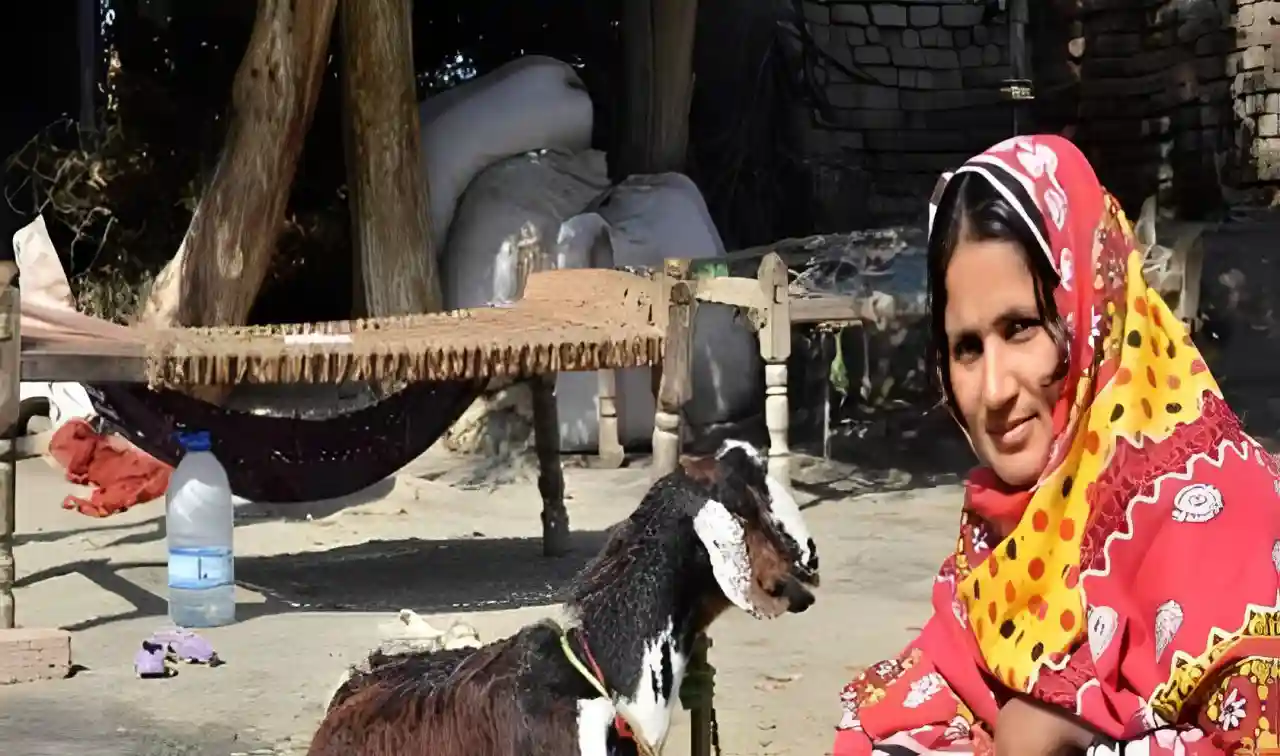
Kazbano Bibi aged 32 is one of 10 children of a peasant family from village Budho Samejo of district Jacobabad. Born into a wretched and conservative family Kazbano could not have the opportunity and wherewithal to attend a school. She was confined to the thatched hut of her parents lending a hand to her mother in cooking and making Rillis (traditional embellished wall and floor sheets).
Kazbano was only 15 when she was married into a landless poor family where she spent most of her time tending to the extended family in a cramped mud room. Her over-indebted in-laws were sharecroppers of 10% yield on a farm which was far less to feed the extended family. Kazbano says’ “The family-owned five goats which used to give milk for household consumption while they were dependent on neighbours, who had buffalo, for butter and daytime meals.
Kazbano gave birth to her son one year after her marriage followed by six children each with a gap of one year. She says, “All children were born in the house without the help of any midwife. I did not know about pre-delivery medical check-ups that the local Community Health Workers suggest to pregnant women nowadays. In sickness, we had to travel to Thul, a place 5 km away from our village. We were not allowed to go out without a male companion. Also, unlike today, the roads were not paved and our men traveled to Thul on bullock carts.”…
- May 24, 2018
- By: Savaila A. Hunzai
- "Daily Morning Mail"
Our today’s story in the series “The Journey of Transformation” is about Ayesha from Karampur village of district Kashmore in Upper Sindh. She was raised among eight siblings: five sisters and three brothers. Her parents were sharecroppers, working on a landlord’s field to keep the body and soul together on the meager proceeds of their labor.
Ayesha is 45 now as a much better-off person but her story is an eye-opening account of misery and privation and her journey of transformation is an impressive story of a brave rural woman. As a child, Ayesha’s social space was limited to her immediate family and the field of the landlord. Like other girls in the village Ayesha was never sent to school because it was considered as a social stigma to allow girls and women to interact with the outside world.
At the age of 16, her marriage was arranged with one of her cousins, who was an unskilled daily-wage laborer in a construction company. The joint family of her in-laws was crammed in a two-room mud house. Ayesha’s agony continued for years aggravated by poverty, malnourishment, exploitative working conditions at the landlord’s fields, and unaccounted domestic labour. ..
- May 05, 2018
- By: Amir Hussain and Savaila A Hunzai
- "Daily Morning Mail"
Hakeem Khatoon of village Suleeman Buriro of district Jacobabad was only three years old when she lost her mother. Hakeem was sent to her maternal grandmother, while her two brothers continued to live with their father. Hakeem was coerced into labor on a landlord’s fields with her maternal uncles and aunts. When she turned 12, Hakeem was sent back to her father to live with him till her marriage at the age of 14.
Hakeem’s married life was full of hardship as her workload increased manifold. She was solely responsible for collecting water, cooking for the extended family, and labor work on a small piece of land owned by her in-laws.
Hakeem narrates her story “After one year of my marriage, I had my first daughter, and two years’ later the second one was born. As I did not give a son to my husband from the first two births, my husband had this excuse to marry another woman…
- May 11, 2018
- By: Amir Hussain
- Article Published in "The News"
Today’s story of transformation is also a firsthand account of a rural woman who was able to defeat intergenerational poverty. Nageena, a resident of Jhando Khan Village of Kashmore in Sindh, was married at the age of 15 to a man who already had another wife. Her husband owned a donkey cart, which was the only tangible asset for the joint family. His other family members used to work as sharecroppers. Nageena started her married life with her husband’s joint family in a congested two-room mud house without a toilet.
She worked in the fields with her other family members soon after her marriage. Nageena was responsible for collecting and storing water for the extended family in addition to preparing cow dung cakes as domestic fuel. She also ensured that the donkey was well-fed as it was the main source of the family’s livelihood..
- May 03, 2018
- By: Amir Hussain
- Article Published in "The News"

Let us celebrate the successes of our brave women whose stories seldom reach the world. Today’s story is about Noor Bano of Village Jhando Khan Lashari in the Kashmore district.
Noor Bano was born and raised in an impoverished family with ten brothers and four sisters. Her parents did not own any land and they had to put up with a meagre income as sharecroppers. None of Noor’s siblings could attend the school because her parents could not afford educational expense.
Married at the age of 13 to a man who was 10 years older to her, Noor says: “At the time of marriage, my husband worked as a guard for the local landlord..
- April 27, 2018
- By: Amir Hussain
- Article Published in "The News"

My previous article, ‘Recipe for rural development’ published in these pages on April 20, discussed the transformative potential of the Sindh government’s Union Council Based Poverty Reduction Program (UCBPRP). In this article, I will try to encapsulate the story of a rural woman’s journey from plight to prosperity. This journey of transformation is an eye-opening account of the impact of the collaborative work carried out by the Sindh government and the rural support programmes (RSPs) initiated through the UCBPRP. It is also the story of resilience; perseverance; and the enormous potential of finding liberation from poverty through participatory development.
Nawab Khatoon, a 38-year-old woman who was born and raised in the Abad village of District Shikarpur, is the eldest among 11 siblings – nine sisters and two brothers. She had a pernicious childhood plagued with extreme poverty that was aggravated by her father’s illness. Her frail mother put herself through exploitative wage labour on a local landlord’s farm to earn a living. Nawab never had chance to attend school and was forced to learn how to stitch rillis and parandas to help her parents feed their large family.
- April 24, 2018
- By: Sheher Bano
- Article Published in "The News"

Let us celebrate the successes of our brave women whose stories seldom reach the world. Today’s story is about Noor Bano of Village Jhando Khan Lashari in the Kashmore district.
Noor Bano was born and raised in an impoverished family with ten brothers and four sisters. Her parents did not own any land and they had to put up with a meagre income as sharecroppers. None of Noor’s siblings could attend the school because her parents could not afford educational expense.
Married at the age of 13 to a man who was 10 years older to her, Noor says: “At the time of marriage, my husband worked as a guard for the local landlord..


An exquisite display of traditional crafts at the Dolmen Mall in Clifton included a mixture of Sindh handicrafts made by rural women, including home textiles, baskets, jewelry, dresses, dupattas, and shawls embellished with traditional embroidery and cutwork.
The event was Sindh Rural Support Organisation’s (SRSO) effort to provide market links to rural women and artisans. The festival attracted large numbers of women residents of Clifton, Defence Housing Authority, Bath Island, and nearby areas and concluded on Sunday.
SRSO Chief Executive Officer Muhammad Dital Kalhoro said the event’s objective was to facilitate better income for women artisans of rural Sindh. “We have trained over 10,000 women from some of the most underdeveloped regions of Jacobabad, Kandhkot, Kashmore, Shikarpur, Ghotki, Kambar Shahdadkot, Khairpur and Sukkur,” said Kalhoro.
Women’s Development Minister Irum Khalid inaugurated the three-day event. She lauded the SRSO’s efforts in arranging it and expressed hope that it could further help develop links and facilitate market access for artisans of skilled products.
Senator Shazia Atta Mari who visited the exhibition lauded the event and expressed hope that the event could be further helpful for the development of linkages and easy market access to their skilled products.
The exhibition comprised stitched and unstitched cloth, needlework with different types of embroidery, strawwork, bed sheets, crochetwork, machine embroidery, and other items for women.
Scores of people visited the exhibition and appreciated the work of skilled women entrepreneurs.
- Back
- Last Page